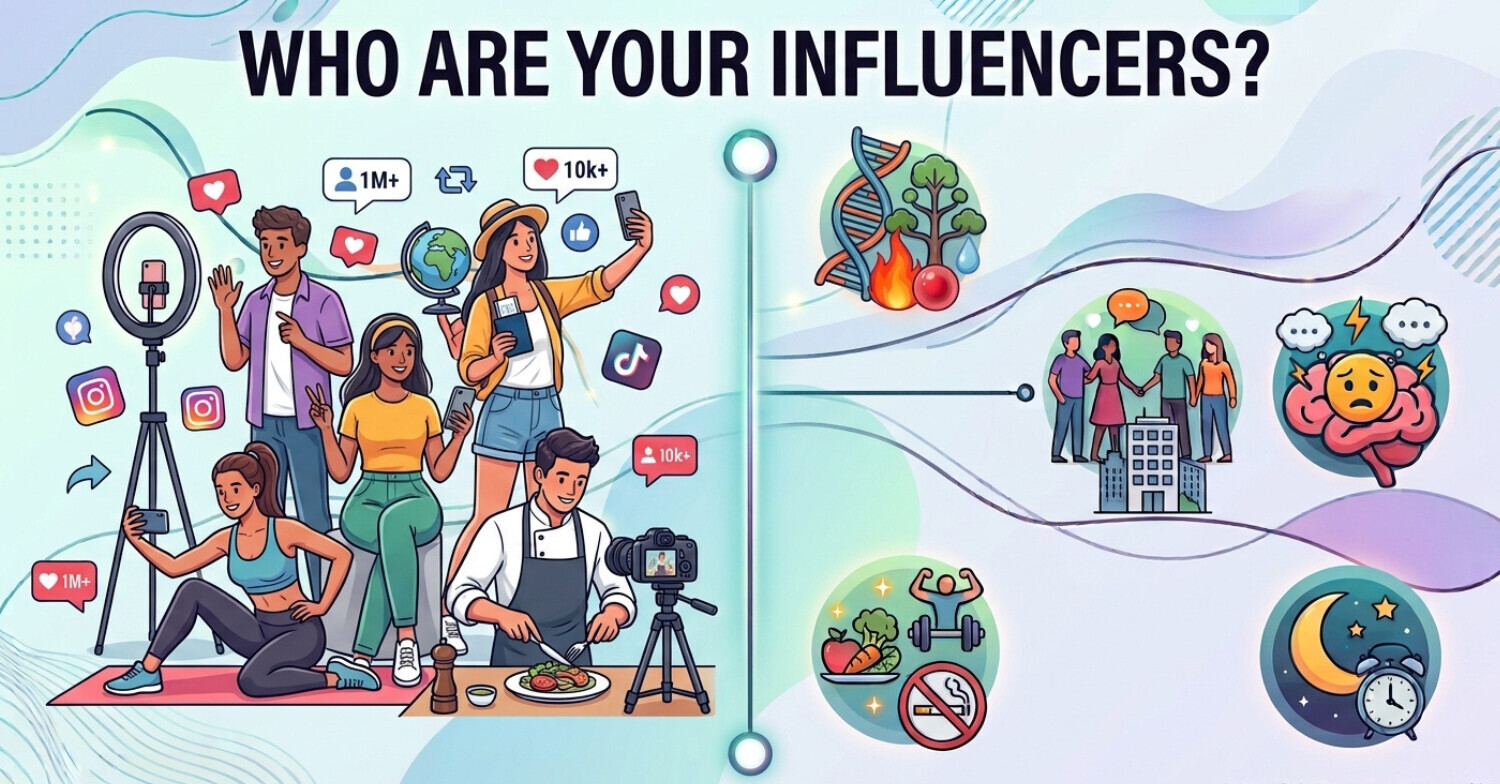
We live in a world full of influencers — people who shape how we think, feel, and act. But here’s something most patients never consider:
Your pain has influencers too.
They’re not on Instagram or YouTube. They don’t have millions of followers — just one: you. And they have a huge impact on how your body feels day to day. And just like online influencers, some of them are helpful… and some of them you might want to unfollow.
Let’s break this down in a way that makes sense in real life.
Imaging Isn’t Your Main Influencer
Many patients come in worried about what their X‑ray or MRI shows. Arthritis. Disc bulges. Degeneration. “Wear and tear.” But here’s the truth I wish everyone knew: Most of these findings are normal — and many people with the exact same scans have zero pain. Imaging shows structure, not experience. It shows anatomy, not sensitivity. It shows the street, not the traffic.
Your pain is shaped by what’s happening in your whole system — your stress, sleep, movement, inflammation, history, and environment.
Those are your real influencers.
The Pain Influencers You Should Know About
Think of pain like a volume knob. These influencers can turn it up or down.
Biological Influencers
These are the physical contributors — the things happening inside your tissues. And importantly, the longer a problem has been present, the more influence it tends to have on your pain. Time matters: when irritation or inflammation has been simmering for weeks or months, it can train your system to stay more reactive.
- Tissue irritation — joints, discs, ligaments, or muscles under load
- Inflammation — from injury, diet, stress, or systemic factors
- Nerve sensitivity — nerves become quicker to react after repeated flare‑ups
- Past injuries or surgeries — old injuries can change how your body distributes load
- Hormonal changes — cortisol, estrogen, and other hormones influence pain thresholds
Nervous System Influencers
- Persistent sensitivity after months of pain
- Fear of movement
- Stress load
- Poor sleep
- Low mood or frustration
Lifestyle Influencers
- Too little activity
- Too much activity
- Gut health and inflammation
- Nutrition patterns
- Hydration
Social & Environmental Influencers
- Workload and physical demands
- Family responsibilities
- Life transitions
- Support systems
- Daily pressure or rushing
History & Timing Influencers
- Delayed treatment
- Numerous previous episodes
The Good News: You Can Change Your Influencers
Here’s the part patients often find most reassuring:
Pain has modifiable factors. And addressing even two or three of them can produce a meaningful reduction in pain. You don’t need to fix everything. You don’t need a perfect lifestyle. You don’t need to overhaul your entire routine. Small, targeted changes can calm your nervous system, reduce sensitivity, and help your body feel safer and more resilient.
This is good news because it means:
- You’re not stuck.
- You’re not broken.
- Your imaging does not define your future.
When we work together to address your Pain Influencers — improving sleep, restoring movement confidence, reducing inflammation, managing stress, and building strength — your pain becomes more manageable, predictable, and often dramatically reduced.
Your pain story is not written in your MRI. It’s written in your life — and that means you have influence too.
Biography:
Dr. David Olson, DC: Dr. Olson has over 45 years of experience treating back pain, neck pain, and sports injuries in North Vancouver. He is the founder of Edgemont Chiropractic Clinic and is passionate about combining the latest research with hands-on care to help patients move and live pain-free. When he's not in the clinic, Dr. Olson enjoys staying active on the North Shore. He practices at Edgemont Village in North Vancouver, BC.

Dr. David Olson
Contact Me
%20(Website).jpg)