Warning: This is not a short blog. Give yourself time to read it - and then read it again. We want you to understand this topic as clearly as we do.
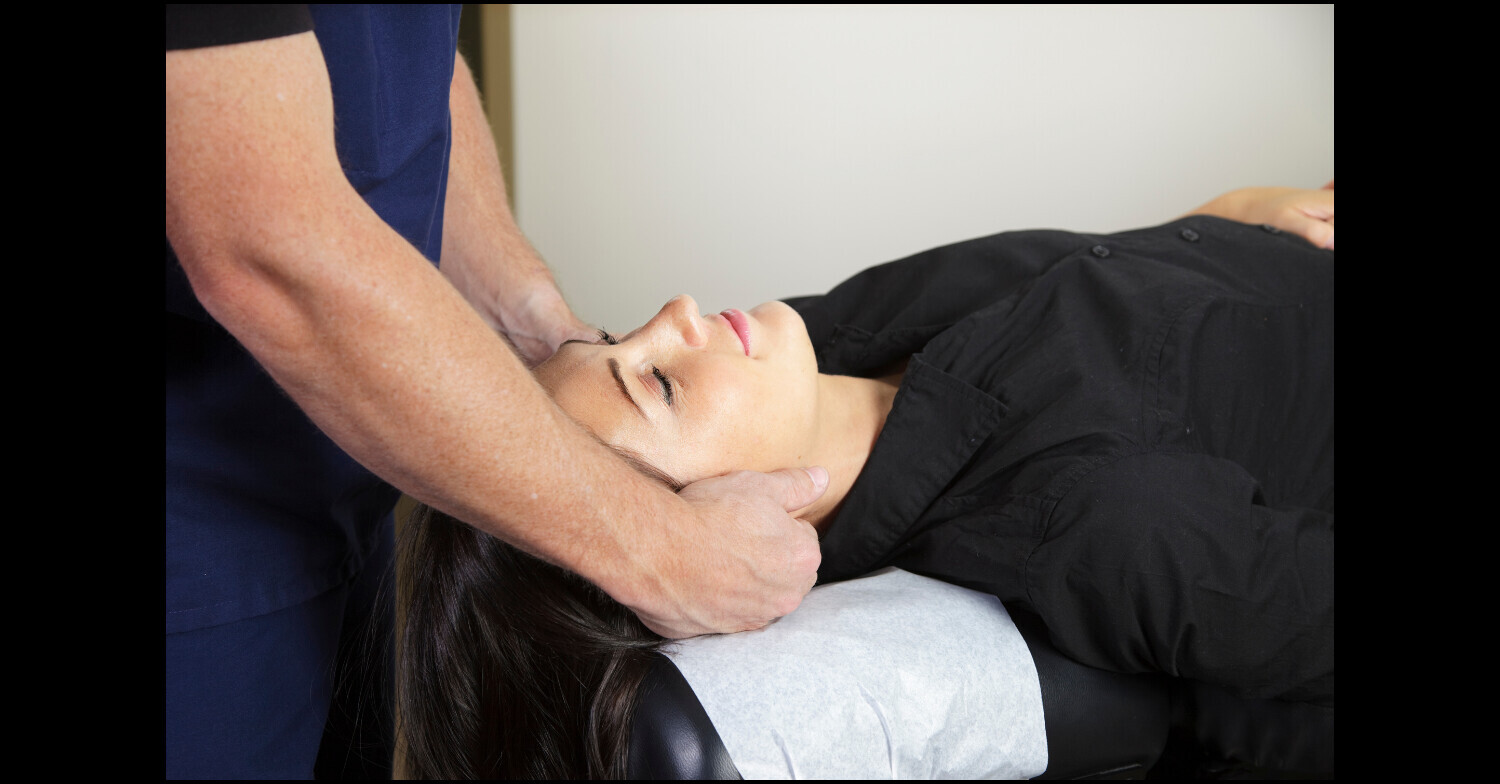
Neck adjustment, or cervical manipulation, is one of the treatments most commonly associated withchiropractic care. It is also one of the treatments that generates the most questions:
“Is it safe?”
“Can it cause a stroke?”
“Do you have to crack my neck?”
These are reasonable questions. In fact, anyone considering chiropractic care should ask them.
At Edgemont Chiropractic Clinic, we believe patients deserve answers that are straightforward—not fear-based, and not falsely reassuring. The reality is more nuanced.
So, is chiropractic neck manipulation safe?
For the vast majority of appropriately selected patients, cervical manipulation is considered low risk. Research examining adverse events in randomized clinical trials has found no increased rate of mild or moderate adverse events compared with control treatments.
However, these studies are not large enough to determine the risk of extremely rare serious complications. No healthcare procedure is completely risk-free.
A chiropractor’s responsibility is not simply to adjust every neck that walks through the door. Our responsibility is to determine whether the patient in front of us is an appropriate candidate for treatment.
That starts with listening.
The examination comes before the adjustment
One of the biggest problems Dr. Olson and Dr. Walker see in healthcare is the temptation to jump directly to treatment.
A patient walks in with neck pain, and the assumption becomes:
“Their neck hurts, so let’s adjust their neck.”
But is that good healthcare?
Neck pain can come from muscles, joints, discs, nerves, posture, injuries, degenerative changes, headaches, and many other causes. Occasionally, neck pain can be an early sign of something requiring medical attention rather than chiropractic treatment.
This is why a proper history and examination matter.
At Edgemont Chiropractic Clinic, our approach begins with understanding what is happening, what the patient’s goals are, and whether chiropractic care is appropriate. We emphasize thorough assessment, clear explanations, individualized treatment plans, and patient education—not a one-size-fits-all adjustment.
The goal is not to adjust you.
The goal is to help you.
Sometimes those things overlap.
Sometimes they don’t.
What about the risk of stroke?
This is the biggest concern people have about neck manipulation.
The concern involves a rare condition called cervical artery dissection (CeAD)—a tear in the wall of an artery supplying the brain. In some circumstances, this can lead to stroke.
This is a serious condition, and it should not be dismissed.
But understanding the research is complicated.
A person developing CeAD may first experience neck pain or headache. Those symptoms often lead them to seek care from a chiropractor, physician, physiotherapist, or another provider. In other words, the underlying condition may already be developing before the patient receives treatment.
This makes it difficult to determine whether manipulation caused the problem or whether the patient sought treatment because of symptoms already caused by the vascular issue.
A systematic review found the evidence inconclusive regarding a strong association between neck manipulation and stroke.
More recent research continues to examine the question. A 2025 narrative review concluded:
- There is no convincing evidence that cervical manipulation causes CeAD.
- When CeAD symptoms are present, manipulation could theoretically dislodge a thrombus and cause stroke—making proper screening essential.
- Serious vascular events have also been reported following other forms of neck treatment, not only manipulation.
The risk appears to be very low, but it is not appropriate to tell patients the risk is zero.
Knowing when not to adjust the neck
This may be the most important part of the conversation.
A good chiropractor should know how to adjust a neck. Drs. Olson and Walker have collectively practiced for over 80 years, with nearly one million treatments between them.
A good chiropractor should also know when not to adjust one.
Symptoms that should make a practitioner stop and reconsider include:
- Sudden, severe, or unusual headache
- Sudden severe neck pain
- New dizziness or significant loss of balance
- Double vision or other sudden visual changes
- Difficulty speaking
- Difficulty swallowing
- New weakness or numbness
- Loss of coordination
- Other sudden or unexplained neurological symptoms
These symptoms do not automatically mean someone has an arterial problem—there are many possible explanations. But they deserve appropriate clinical attention.
The mistake would be assuming every person with neck pain simply needs an adjustment.
You don’t have to have your neck “cracked”
Another misconception is that chiropractic treatment requires twisting the neck until it makes a loud popping sound.
It doesn’t.
A cervical adjustment may produce an audible sound, but the sound is not the objective.
There are many ways to treat the cervical spine, including mobilization, gentle manual techniques, soft-tissue therapy, exercise rehabilitation, and education.
At Edgemont Chiropractic Clinic, treatment is individualized. If you are uncomfortable with a
particular technique, say so. We are always happy to discuss alternatives.
What if I don’t want my neck manipulated?
That’s okay.
Informed consent means exactly what it sounds like.
You should understand:
- What your chiropractor is recommending
- Why it is being recommended
- The potential benefits and risks
- What alternatives exist
You are allowed to ask questions. You are allowed to say no. You are allowed to change your mind.
You should never feel pressured into a treatment you are uncomfortable with.
A good doctor-patient relationship is built on trust, not pressure.
What should you expect at a chiropractic appointment for neck pain?
The first appointment should be about more than simply getting you onto a treatment table.
We want to understand:
- What happened
- How long it has been going on
- What makes it better or worse
- What you’re having difficulty doing
- What you’ve already tried
- What you want to get back to doing
These answers guide the examination and determine what treatment—if any—makes sense.
Our clinic uses a patient-centred approach: assess the individual, explain what is happening, develop an appropriate plan, and give patients tools they can use outside the clinic.
If the only thing you ever do for your neck is receive treatment in a clinic, you may be missing an important piece of the puzzle.
Exercise, strength, mobility, posture, workstation habits, sleep, and activity levels all play a role.
Chiropractic care should not be “snap, crackle, pop” every time
There is a difference between providing chiropractic treatment and simply performing the same adjustment repeatedly.
- If your symptoms change, your examination should change.
- If you aren’t improving, the plan should be reconsidered.
- If something doesn’t make sense, further investigation or referral may be appropriate.
- And if chiropractic care isn’t the right option, your chiropractor should be comfortable telling you that.
Our goal is not to keep you dependent on treatment. Our goal is to educate, individualize care, and help you become more capable of managing your health long-term.
The bottom line
Should you be afraid of chiropractic neck manipulation?
No. But you should be informed.
Cervical manipulation is an established treatment for certain musculoskeletal conditions, and serious complicatios appear to be
rare. At the same time, it is not honest or responsible to claim the treatment is completely risk-free.
The most important safety measure is not the adjustment itself.
It is the clinical decision that comes before the adjustment.
- A chiropractor should listen to you.
- A chiropractor should examine you.
- A chiropractor should understand why your neck hurts.
- A chiropractor should recognize warning signs.
- A chiropractor should explain your options.
- And a chiropractor should know when not to adjust your neck.
Healthcare should be about the individual sitting in front of us—not simply the next appointment on the schedule.
If you have neck pain and are wondering whether chiropractic care is appropriate, the first step is not necessarily an adjustment.
The first step is a conversation and a proper assessment.
Frequently Asked Questions
Is chiropractic neck adjustment safe?
For appropriately selected patients, cervical manipulation is generally considered low risk. Serious complications are very rare, and research continues to examine the relationship between manipulation
and vascular events.
Can a chiropractor cause a stroke by adjusting my neck?
Cervical artery dissection and stroke are rare but serious conditions. Research has not established a simple causal relationship between manipulation and these events, and early symptoms of CeAD can include neck pain and headache—often prompting patients to seek care.
Do chiropractors have to crack your neck?
No. Chiropractic care includes different forms of manipulation, mobilization, soft-tissue treatment,
exercise rehabilitation, and education.
What if I don’t want my neck adjusted?
Tell us. Your treatment should be discussed with you, and alternatives may be available depending on your condition and goals.
When should I seek medical attention instead of having my neck adjusted?
Sudden severe neck pain or headache, new neurological symptoms, significant dizziness, balance problems, visual changes, difficulty speaking or swallowing, weakness, or other unusual symptoms warrant prompt medical assessment.
About Edgemont Chiropractic Clinic
Edgemont Chiropractic Clinic has served North Vancouver and the North Shore for more than four decades. Our approach emphasizes thorough assessment, individualized care, patient education, movement and helping people return to the activities that matter to them.
Biography:
Dr. Chris Walker, DC Dr. Chris Walker has over 25 years of chiropractic experience. He joined Edgemont Chiropractic Clinic in North Vancouver in 2023 and specializes in musculoskeletal injuries, desk worker pain, and rehabilitation. He takes a patient-centered approach, combining spinal adjustments with exercise guidance to help patients recover faster and prevent future injury. Dr. Walker is committed to ongoing education and bringing the latest chiropractic techniques to his North Shore patients.

Dr. Christopher Walker
Contact Me.jpg)
%20(Website).jpg)